India holds one of the richest and most diverse handmade textile traditions in the world. In terms of both material variety and technical mastery, few countries can compare. Its textile heritage is unparalleled, and so too is the depth of present-day knowledge and practice. Across the country, countless techniques thrive in remarkable forms and regional variations. The expertise of handloom weavers, block printers, dyers, woodblock makers, painters, and embroiderers stands as a living national treasure.
To better navigate this vast and intricate landscape, it is helpful to begin with a few foundational classifications. The approach used here is based on the “Location of Design”—that is, the stage at which pattern or motif is introduced into the fabric. Using this lens, textiles can be broadly grouped into three categories: Pre-Loom, On-Loom, and Post-Loom.
The first two categories—Pre-Loom and On-Loom—together form what is known as Handwoven Textiles. The third category, Post-Loom, also referred to as “Handcrafted Textiles,” includes all methods in which design is applied after the fabric has already been woven.
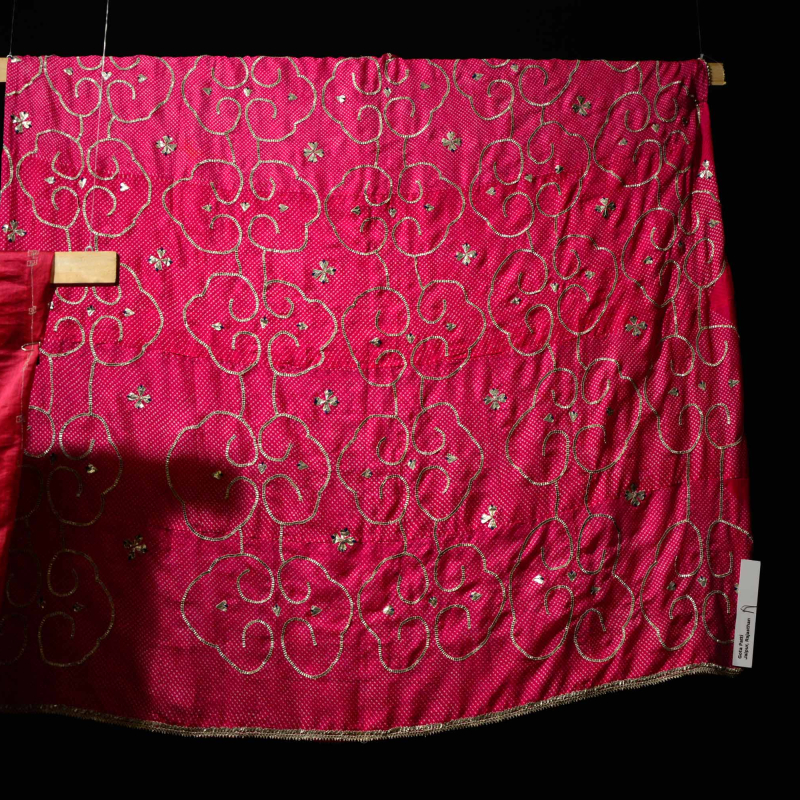
The exhibition Mapping Indian Handcrafted Textiles, presented at the Indira Gandhi National Centre for the Arts in New Delhi (8–30 September 2016), sought to showcase representative examples from five major groups within the Post-Loom category: Painted, Printed, Resist-Dyed, Appliquéd, and Embroidered textiles.
This project was carried out under the Tagore National Fellowship (2015–2017), awarded to Dr. Ruchira Ghose, and was based at and supported by the Indira Gandhi National Centre for the Arts, New Delhi. Mr. Mushtak Khan contributed to the research work supporting the project.